

We all will become Sleep, says Dragos Bojin.
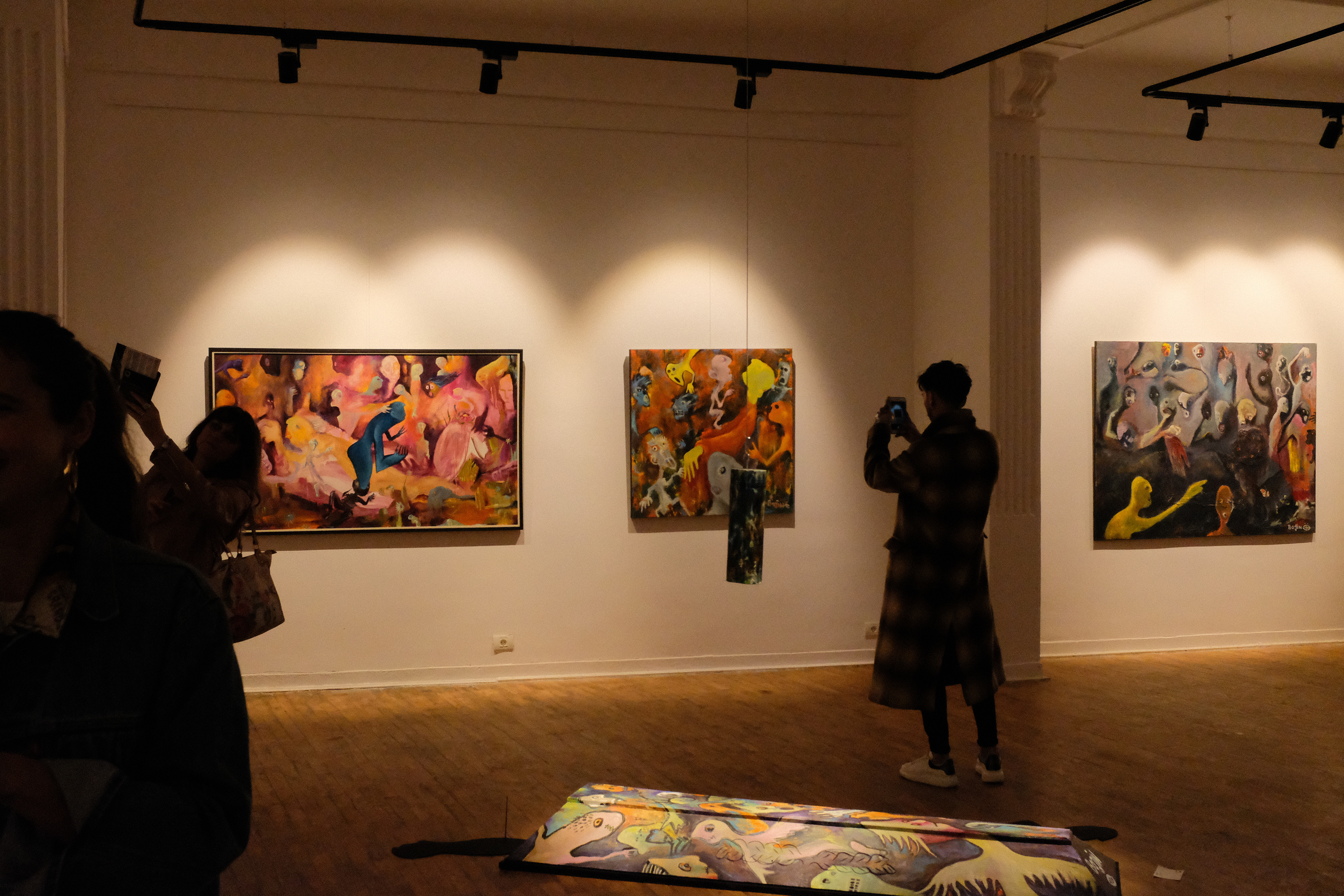
An entire new world, marked with freedom and imagination, is becoming available through sleeping. In a psychedelic expressionistic formal stage, the contemporary aesthetics of ambiguity unfolds in Bojin’s works in open compositions, named Episodes, as in a TV drama sleep series.
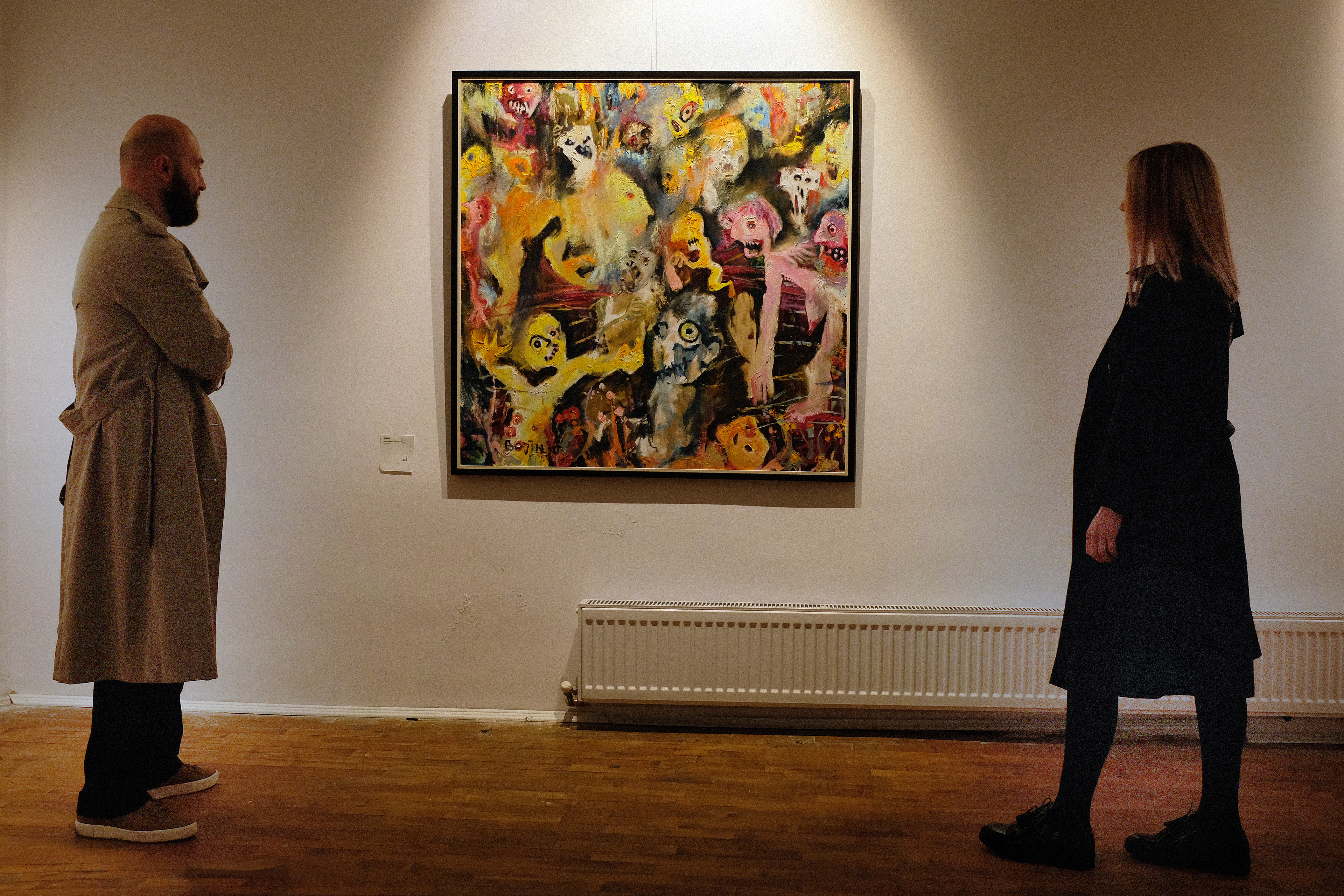
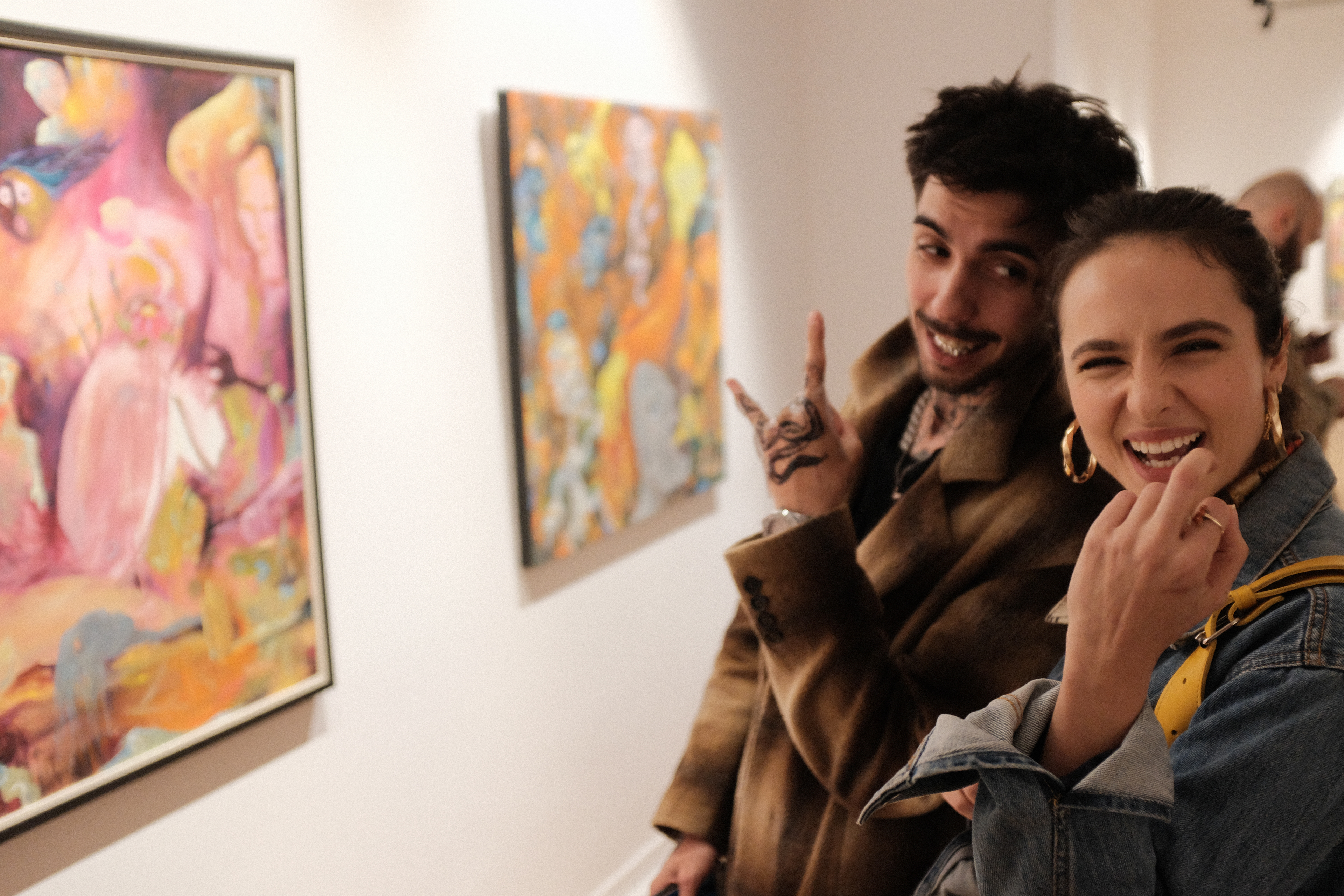
Bojin exposes his Sleep Series on large canvasses, with countless quasi-identical monstrous characters, with an obsessive frentic dynamics of shadowy emotions that chaotically flood a space of social bitterness and stifled collective fear. His artistic approach catalyzes in the mind of the viewer the anxieties from the Munchian perspective, the collective cry.
Bojin deliberately distorts the amplitude of emotions to fully evoke a philosophy of sociality in its miserable, fetid, deformed and odious side where the individual breaks down his contour up to uniformity/ leveling in a huge, amorphous mass. The Sleep’s chromatics is strong, the thick layers, rich in saturated colors, often strident, in the foreground and often grays in the background. Intimate and delicate as it is, the dream becomes in Bojin's „Sleep Stages” a mature artistic gesture of reception of a critical state about our lives on both personal and social level.
Paradoxically, some of the characters look pretty joking and some are very good-hearted, as the painter says. Some of them keep their smile, no matter how tortured and frighten they are.
There’s a glimpse of light in their eyes, as they found a solution to their fears and pains, some seem to try to climb a stair, others try to swim and save themselves, some seem to fall into the abyss.
Bojin's Sleep Stages are not "beautiful" at first glance, but they become as exorcising the demons and fears of each viewer. There’s no beginning or end in Bojin’s paintings. Sleep is God, he says.
Diana Andrei | curator
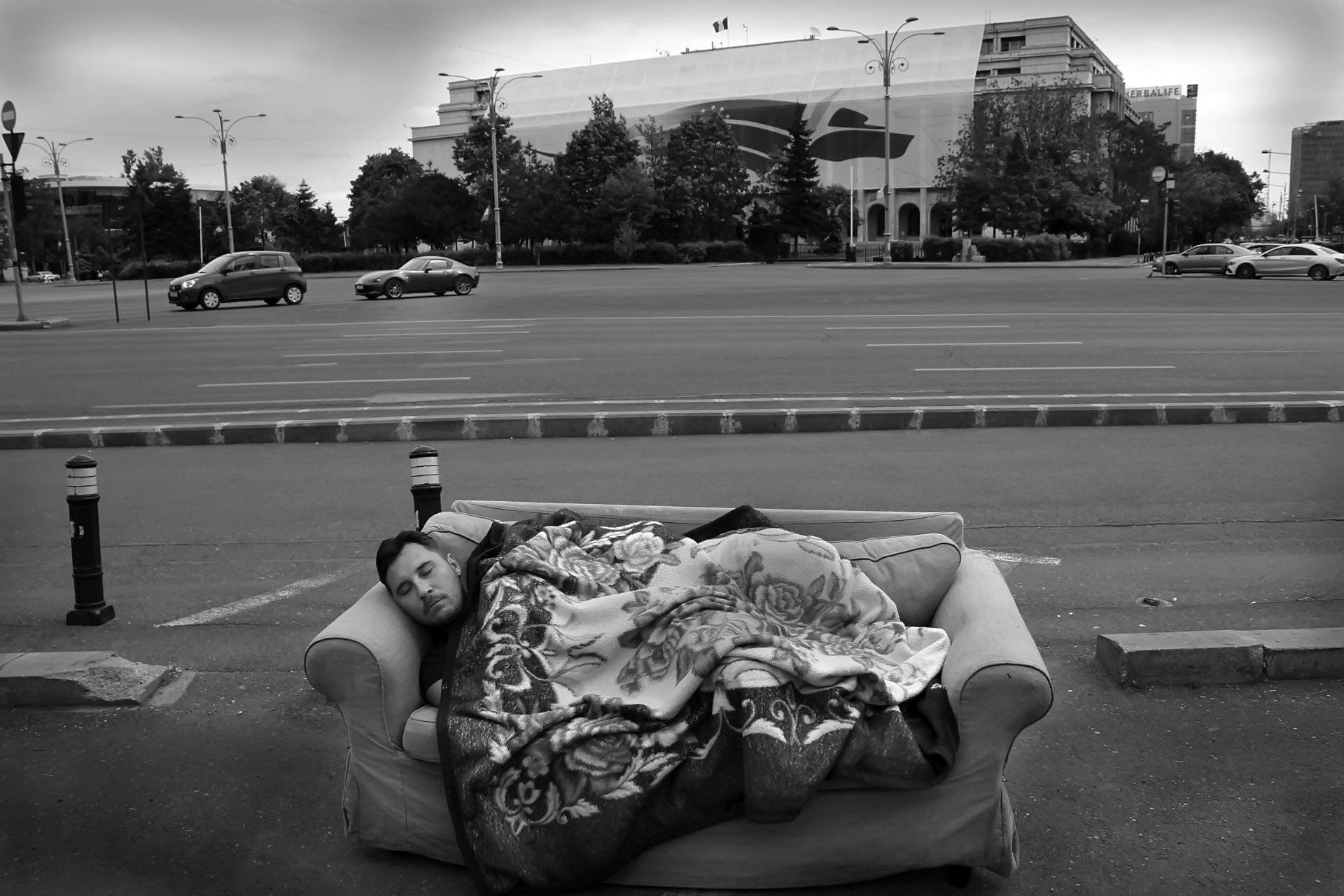
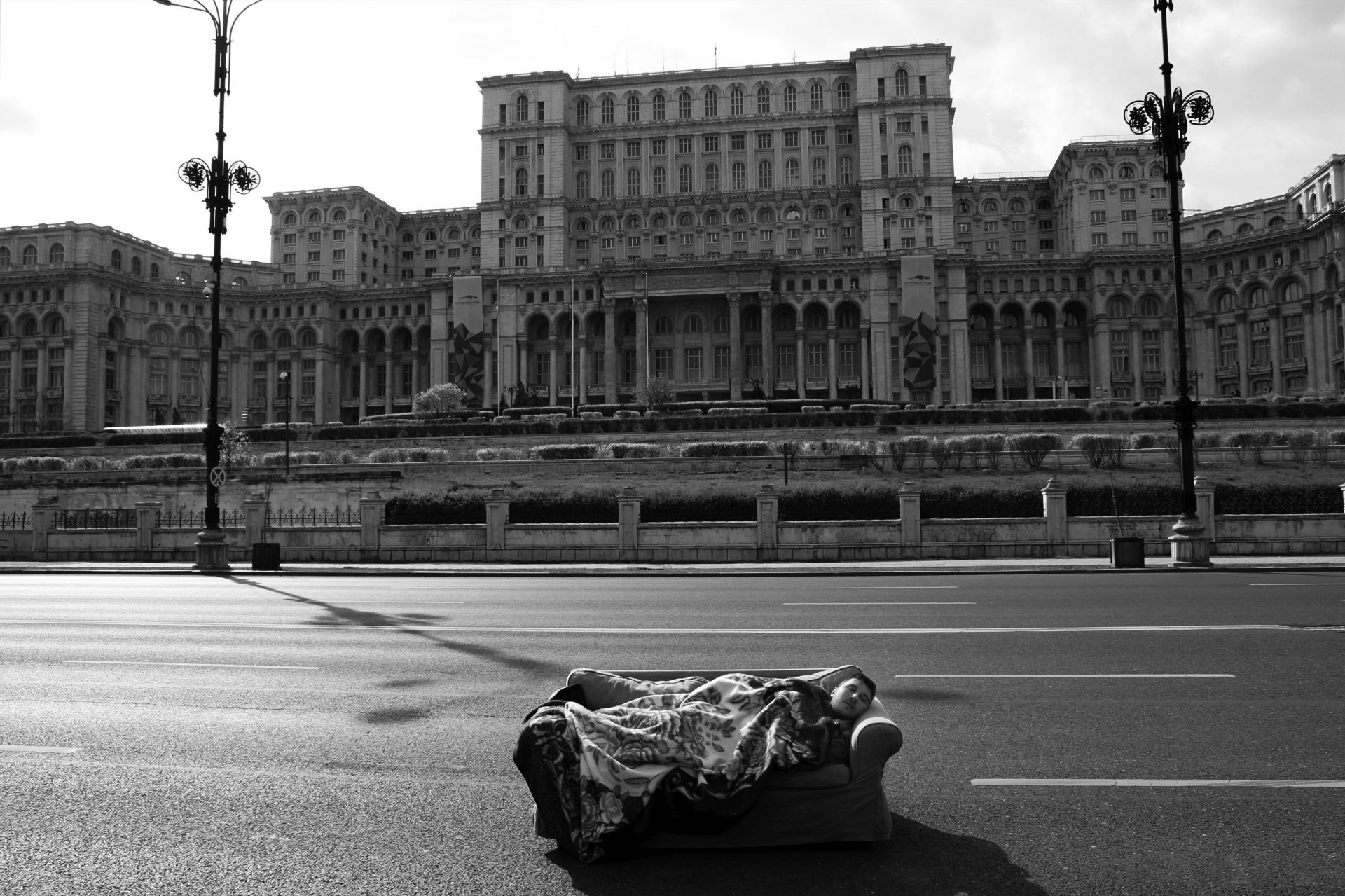


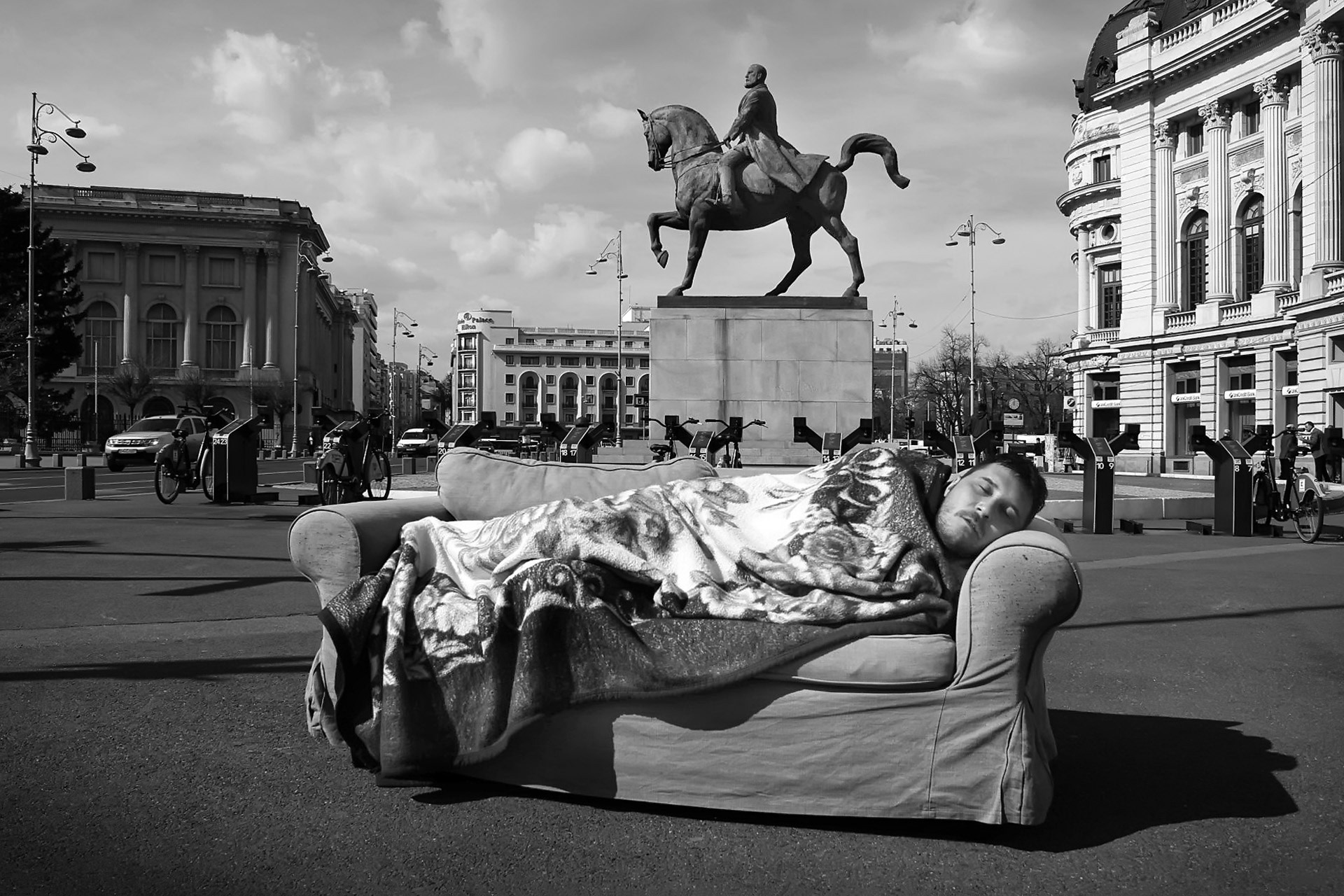
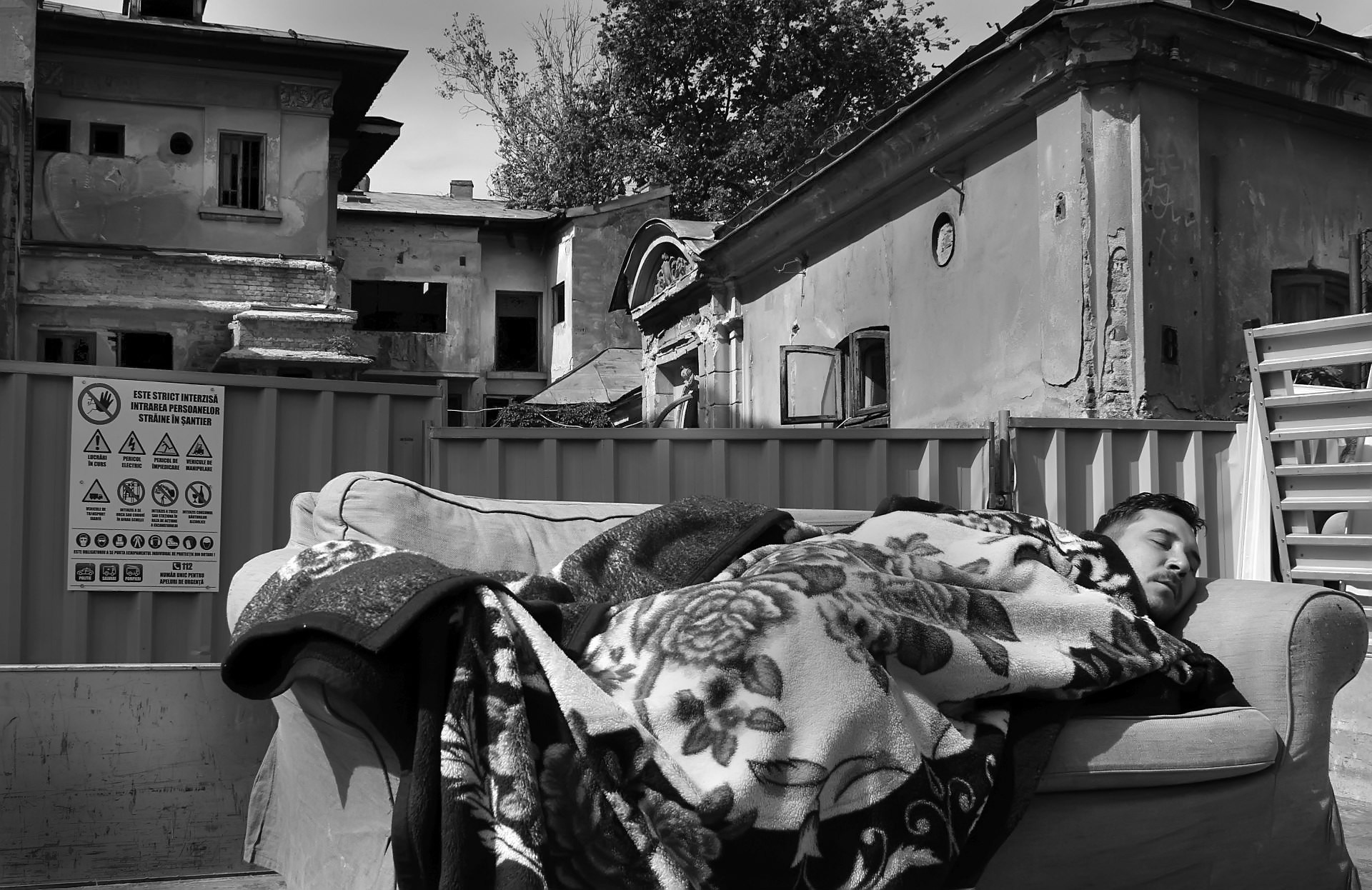
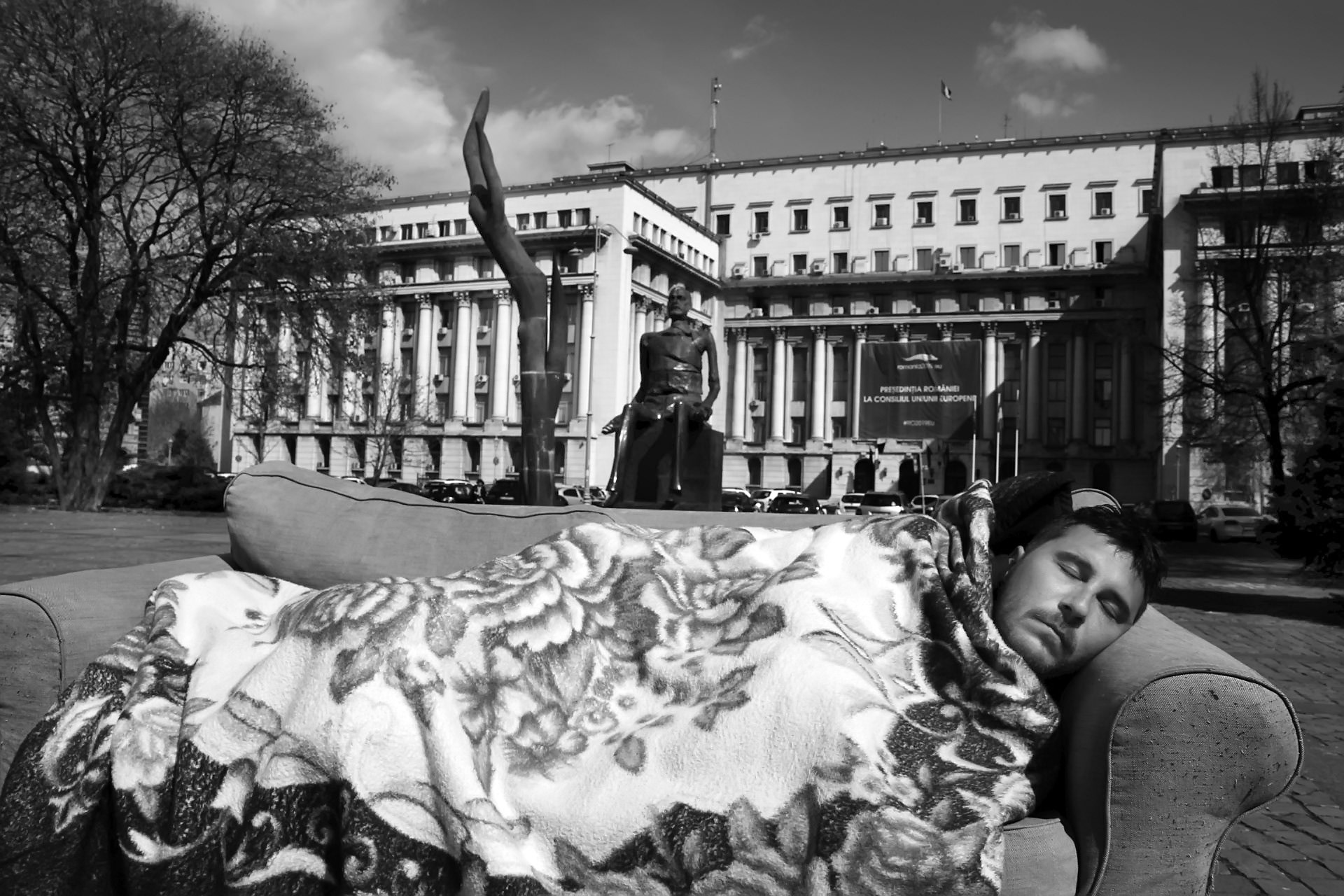
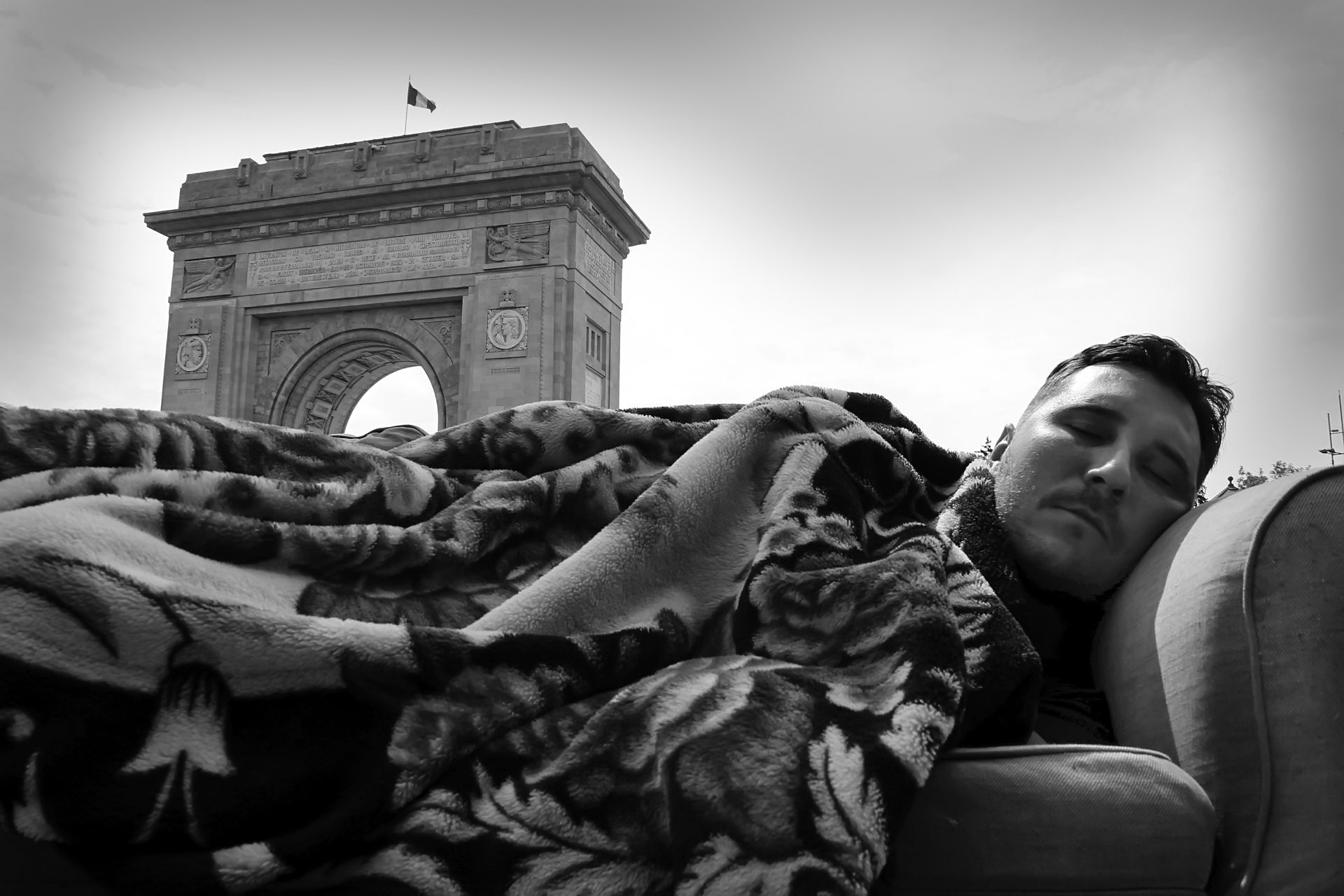
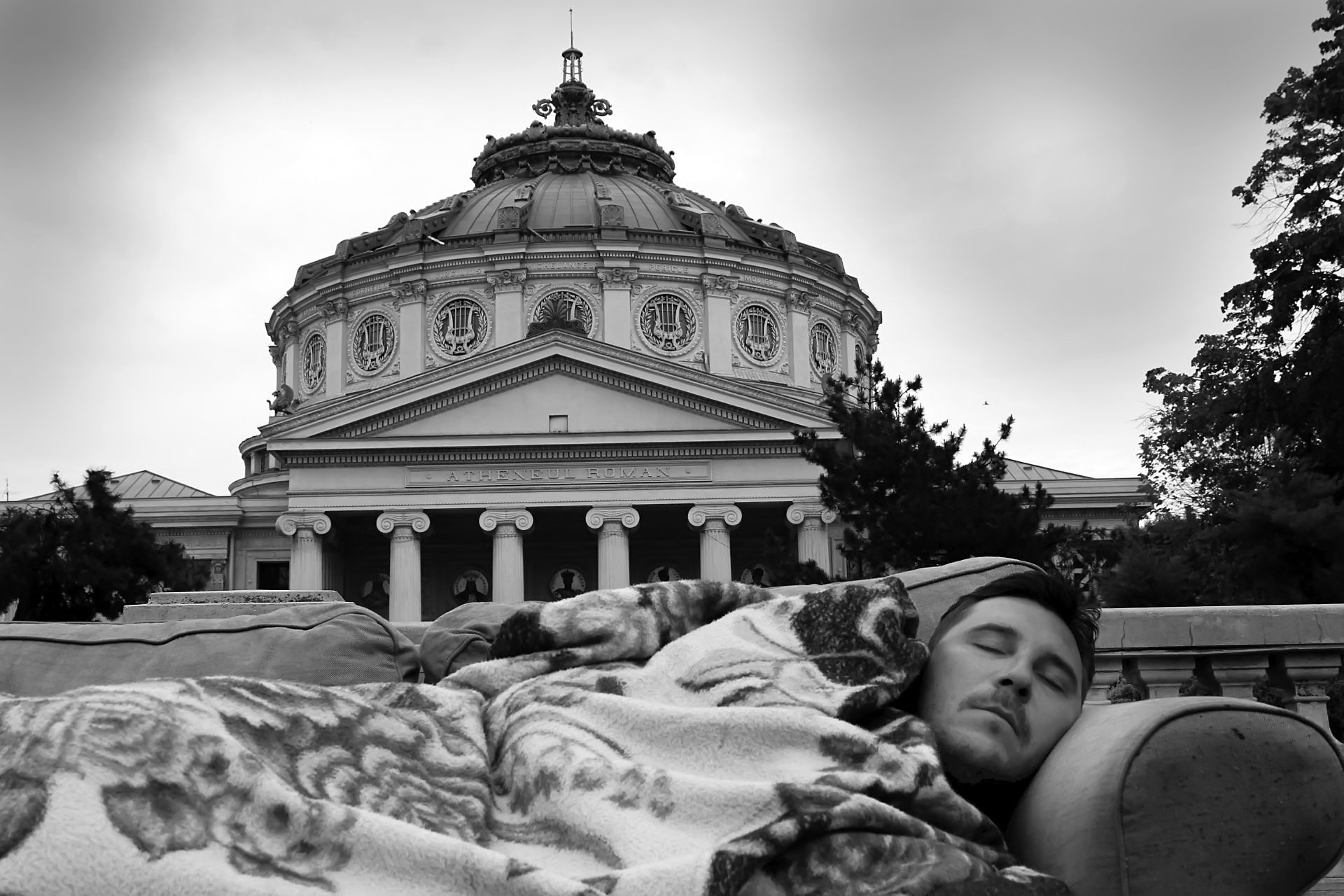
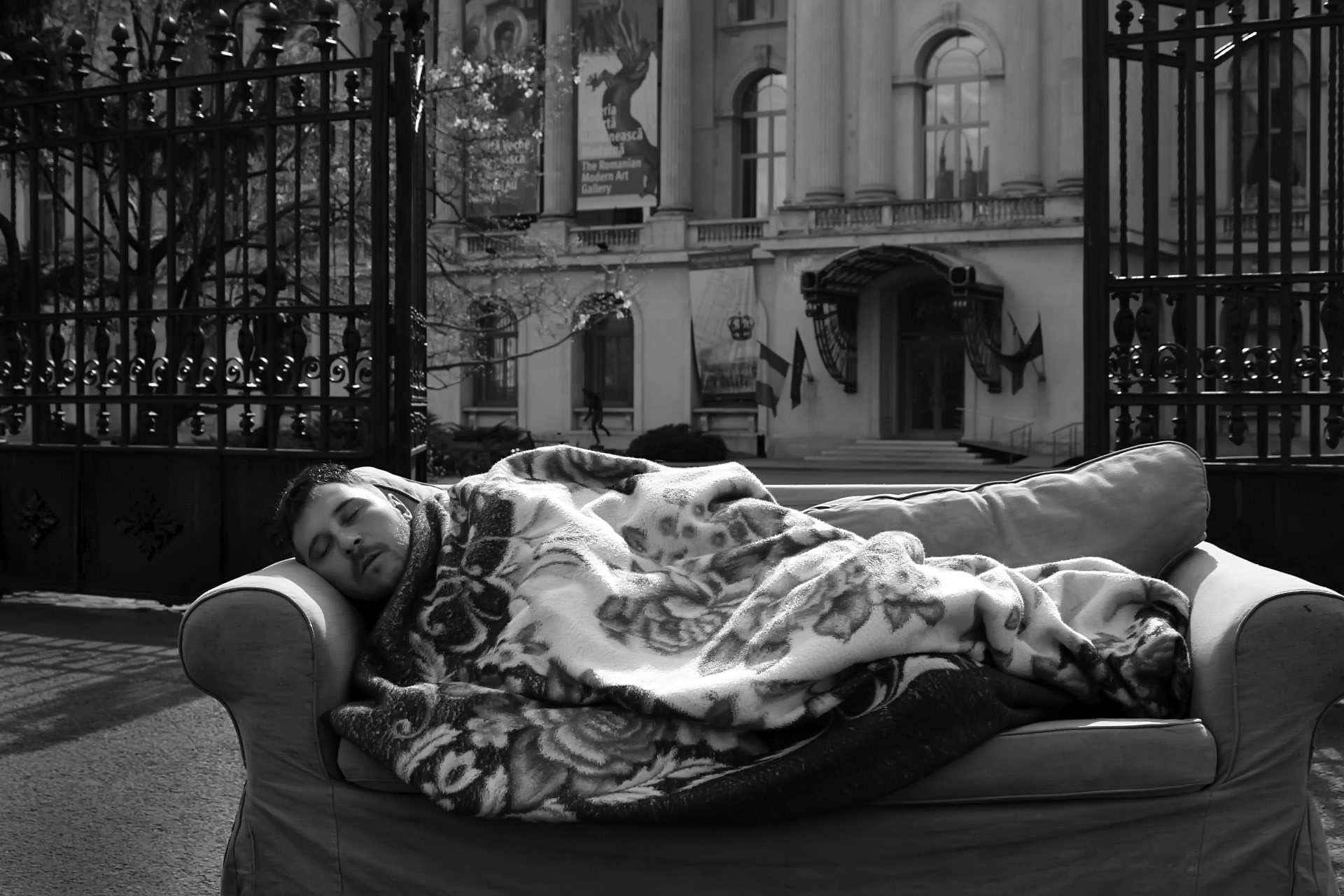

BOJIN: The Subversive Introspection
The Subversive Introspection
Dragoș Bojin’s profound pictorial language—which the artist himself links to a restless navigation through the urban landscape—is the result of an intense and risk-taking methodology we might call "SubArtisting." This approach is defined by a total, visceral immersion into the Self, manifesting on the canvas through a scream of the paintbrush, forging a uniquely Romanian, domestic "Goya."
Bojin’s work pointedly rejects the purely decorative, aspiring instead to be curative art. He is not painting for the client, but for the viewer, compelling us to confront the Freudian poltergeist—the desperate ghost of a humanity overwhelmed by a "troll world." His non-commercial, militant honesty is his strength, offering an essential critical mirror to a society filled with "cardboard monsters."
Through a sophisticated artistic apparatus, Bojin successfully captures the collective shadows of a psychopathological age, transferring these private ghosts from the intimate domestic sphere into the critical, measured environment of the museum. His work thus stands as a vital and audacious record of our shared, turbulent subconscious.